Main Studio
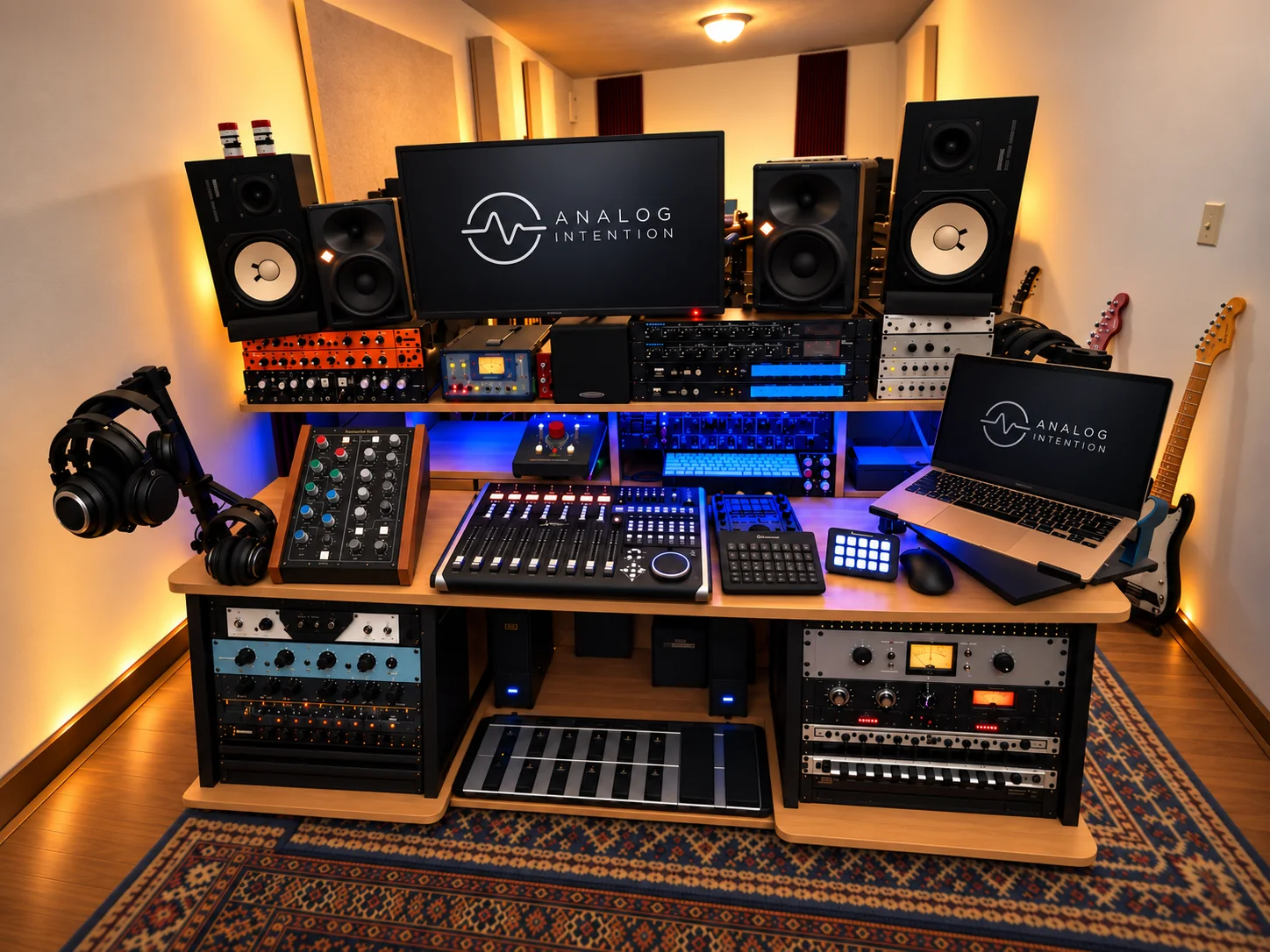
Track and mix without losing the thread.
The control position and performance area live in the same room. That keeps communication direct and makes decisions fast.
Digital handles routing and recall; tube, iron, compression and tape stay in the toolbox.
Character & Control
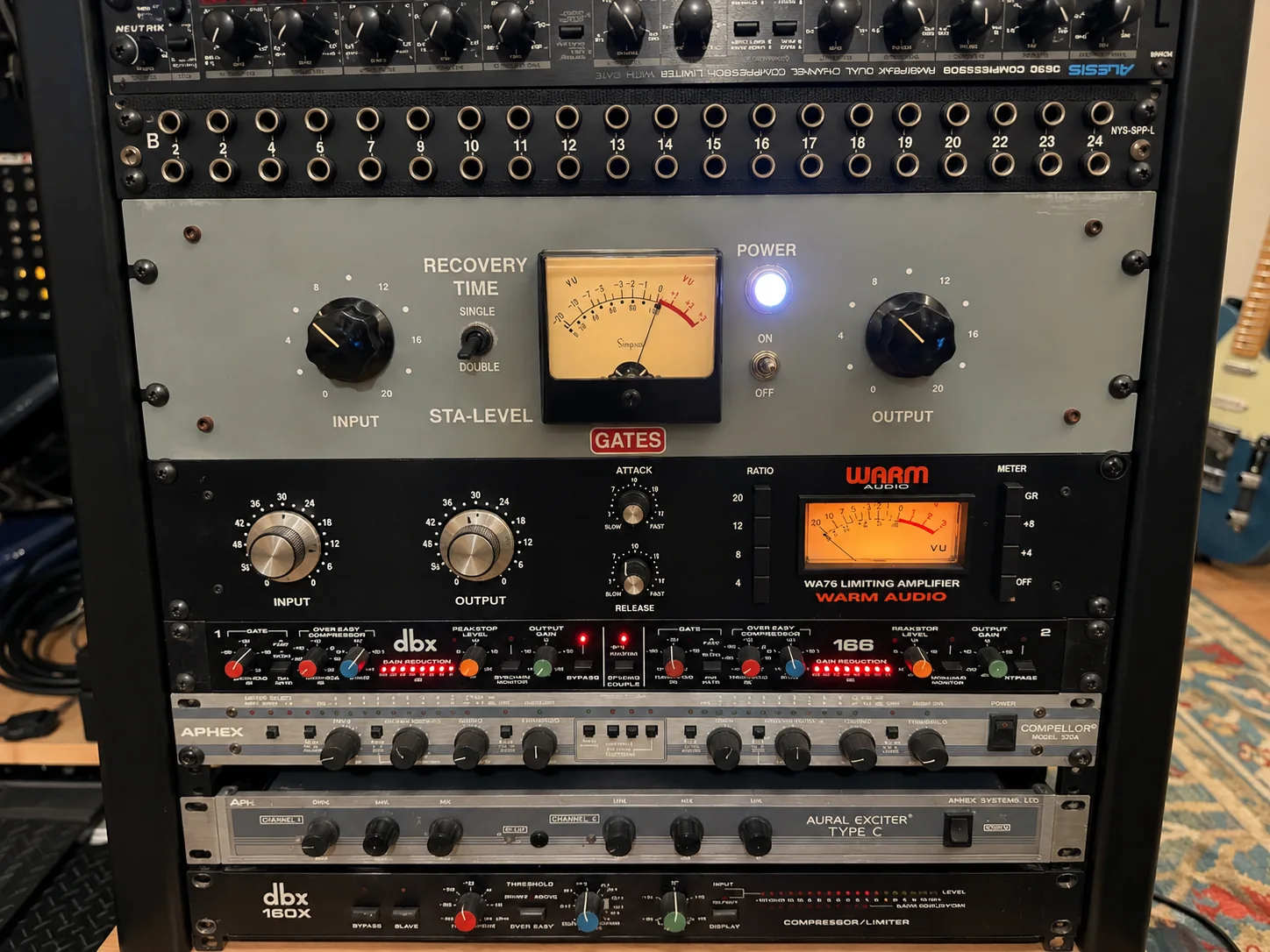
Different dynamics. Different decisions.
The Gates STA-Level and faster limiting and compression paths offer deliberately different envelope behavior. The point is not vintage versus modern—it is choosing the response that serves the performance.
Front End
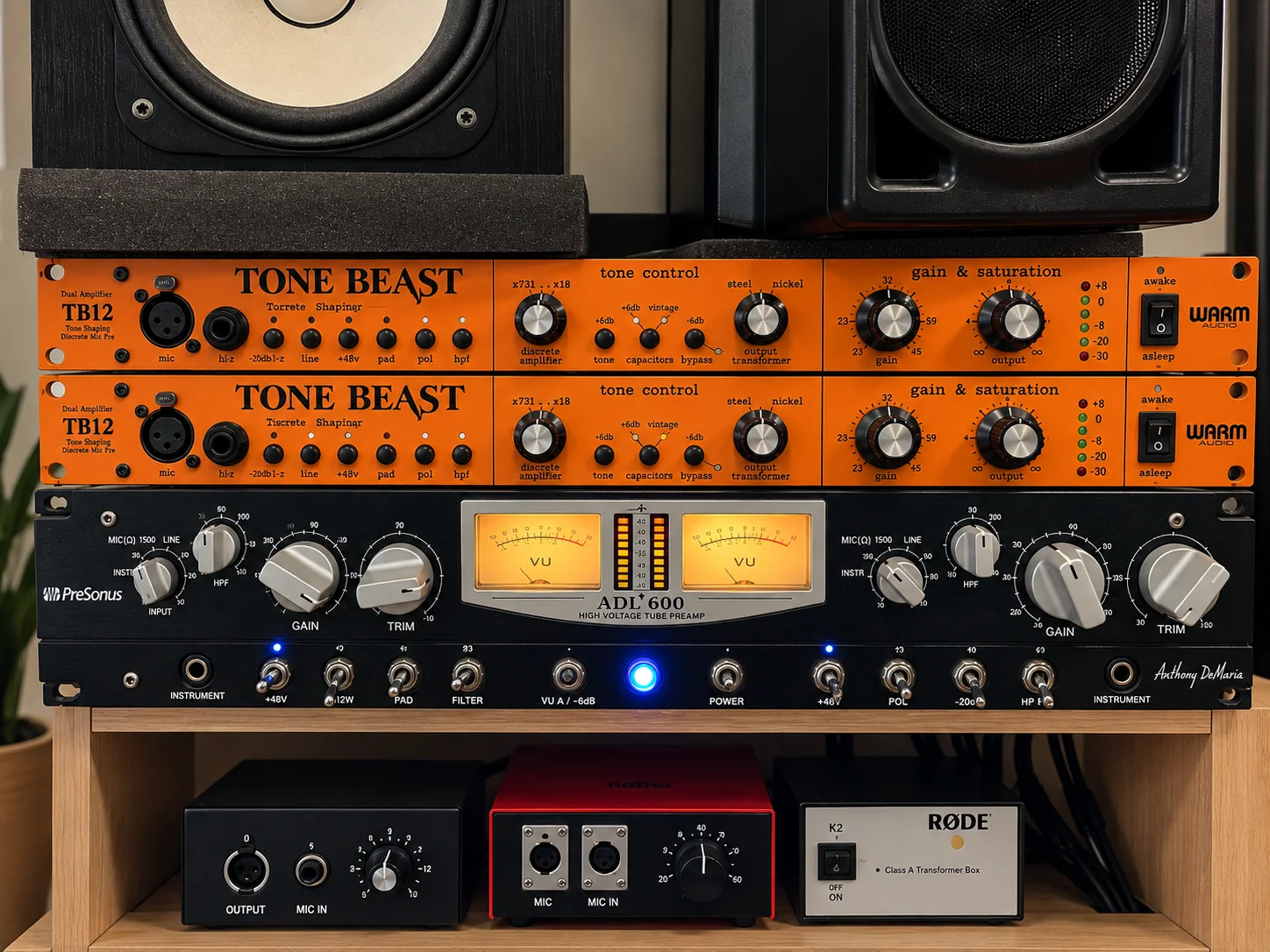
One source. Several paths. One decision.
Multiple preamp architectures let the same source be approached with different gain, transformer and tube behaviors before committing to the sound that earns its place.
Listening Room
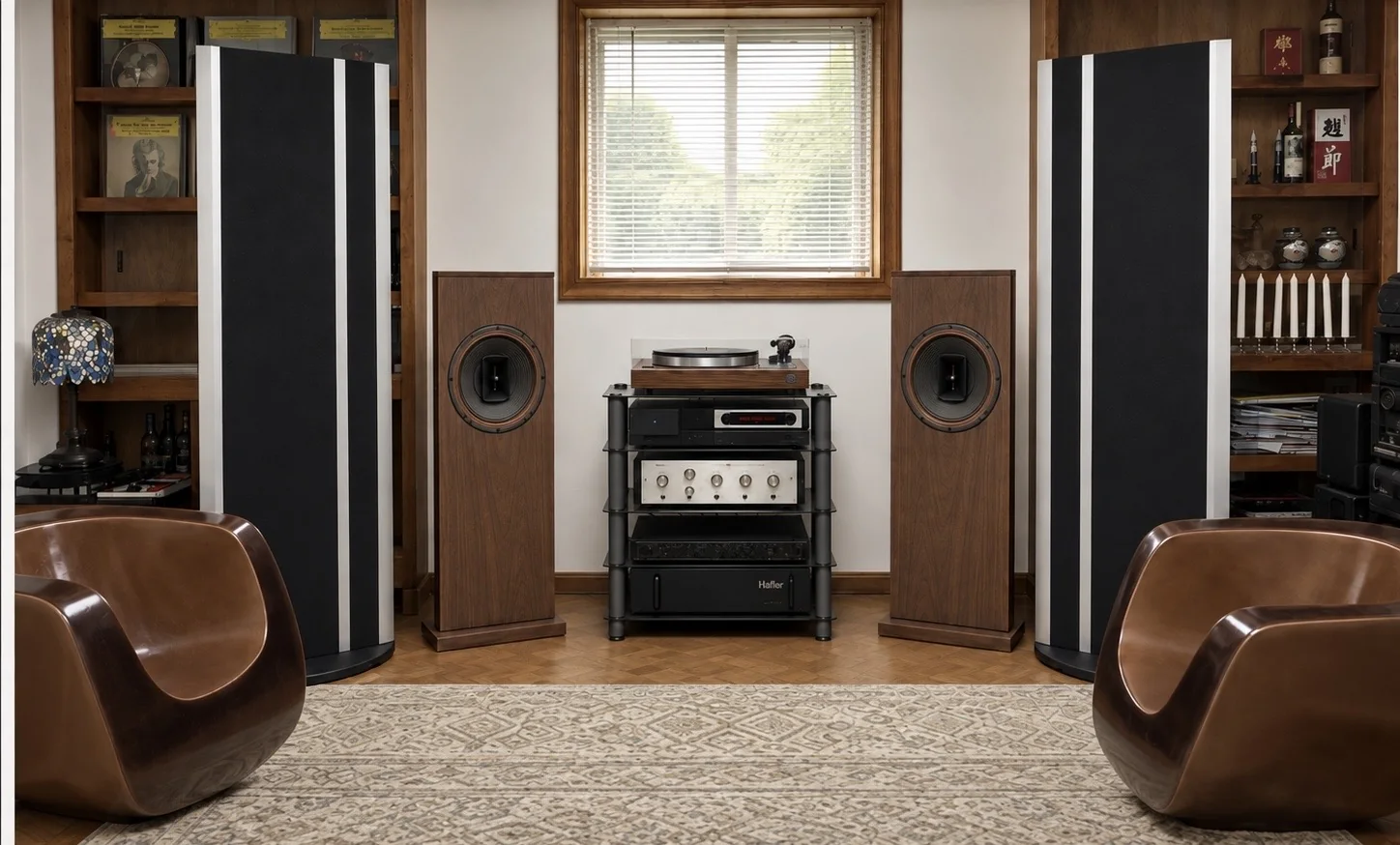
A second room for a different verdict.
The Listening Room provides a deliberately different reference environment. Magnepan and Electro-Voice perspectives challenge translation, balance and hierarchy from another point of view.
This room is used for mastering judgment when needed.
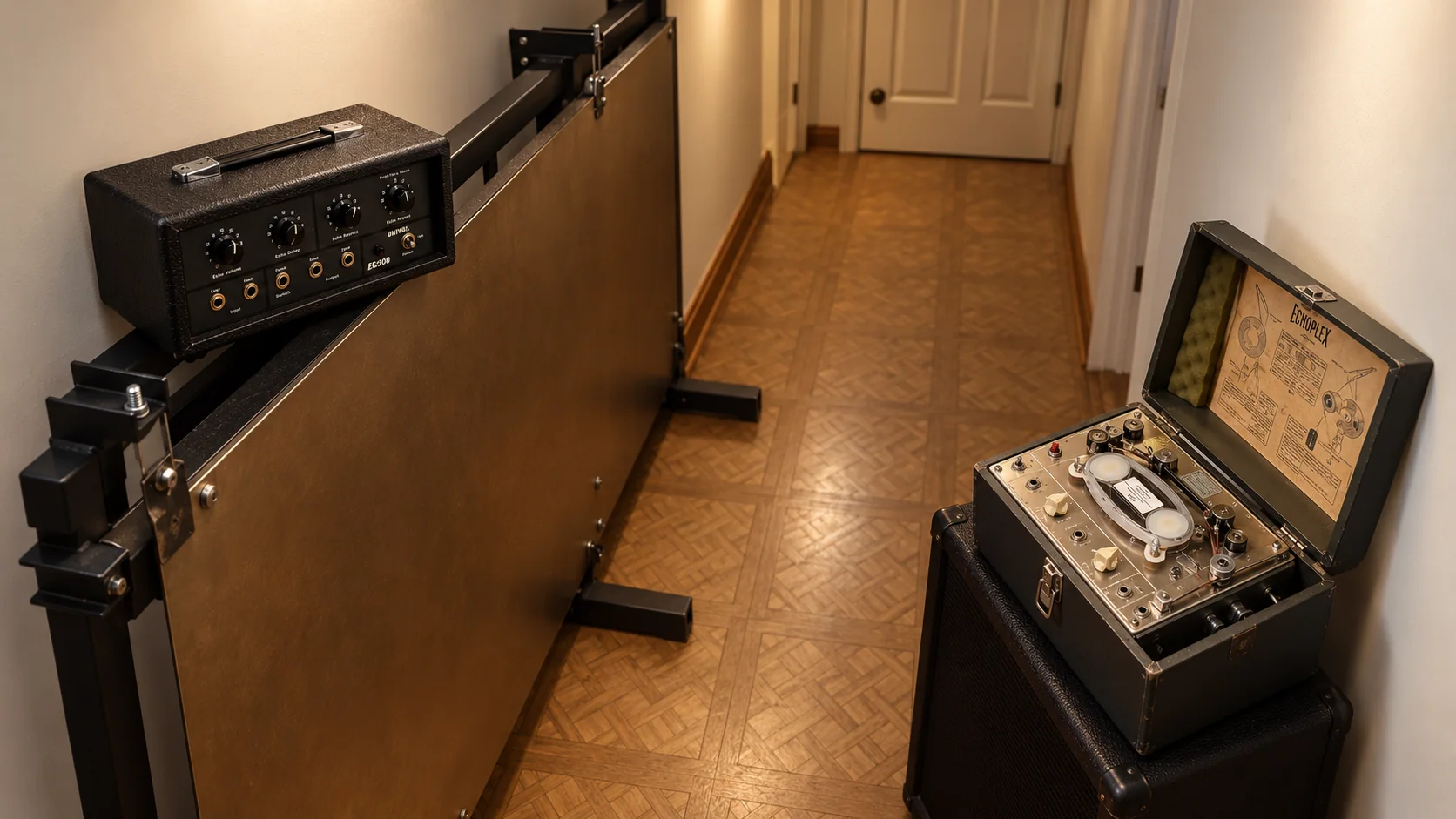
Time & Space Corridor
Delay and reverb you can walk past.
Plate reverb, Echoplex and other physical time devices remain available as behavior, not decoration. Digital time tools sit beside them when they solve the job better.
Historical Keys
Electromechanical instruments that still have work to do.
Fender Rhodes 88, Wurlitzer electric piano, Hammond A-101 and Leslie systems are working instruments, not props. They are maintained so artists can play the actual mechanisms and interactions that created those sounds.
Working history
The past earns its place here.
Vintage microphones, tape machines, amplifiers and instruments stay in the studio only when they still produce a useful behavior, teach us something, or make a musical decision possible. Old is not automatically better.